
People think automation means manufacturing: automation is simply the art of making processes or machines self-acting or self-moving, that’s for a lay man understanding. Now to further explain: Automation can also be viewed as the technique of making a device, machine, process more fully automatic.
Automated machinery may range from simple sensing devices to autonomous robots and other sophisticated equipment.
In this section, the types of automation are defined, and examples of automated systems used in manufacturing are described below.
Type of automation in Production.
(1) fixed automation
(2) programmable automation
(3) flexible automation.
1.FIXED AUTOMATION:
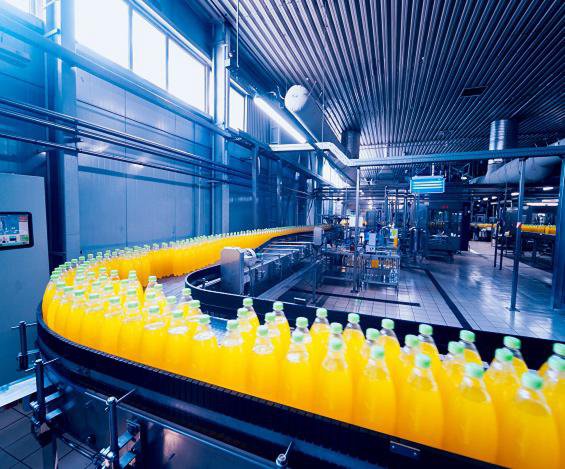
Fixed automation, also known as “hard automation,” refers to an automated production facility in which the sequence of processing operations is fixed by the equipment configuration. This form of automation is characterized by high initial investment and high production rates. It is therefore suitable for products that are made in large volumes. Examples of fixed automation include machining transfer lines found in the automotive industry, automatic assembly machines, and certain chemical processes. In effect, the programmed commands are contained in the machines in the form of cams, gears, wiring, and other hardware that is not easily changed over from one product style to another.
2.PROGRAMMABLE AUTOMATION:
Programmable automation is a form of automation for producing products in batches. The products are made in batch quantities ranging from several dozen to several thousand units at a time. For each new batch, the production equipment must be reprogrammed and changed over to accommodate the new product style. This reprogramming and changeover take time to accomplish, and there is a period of nonproductive time followed by a production run for each new batch. Production rates in programmable automation are generally lower than in fixed automation, because the equipment is designed to facilitate product changeover rather than for product specialization. A numerical-control machine tool is a good example of programmable automation. The program is coded in computer memory for each different product style, and the machine tool is controlled by the computer program. Industrial robots are another example.
3.FLEXIBLE AUTOMATION:
Flexible automation is an extension of programmable automation. The disadvantage with programmable automation is the time required to reprogram and change over the production equipment for each batch of new product we call this a lost production time, which is expensive In flexible automation, the variety of products is sufficiently limited so that the changeover of the equipment can be done very quickly and automatically. The reprogramming of the equipment in flexible automation is done off-line; that is, the programming is accomplished at a computer terminal withoutt using the production equipment itself. Accordingly, there is no need to group identical products into batches; instead, a mixture of different products can be produced one right after another.
( PRODUCTION TECHNOLOGY)
 Technology guides and E-books